

Best Time to Visit Doge’s Palace: Season, Month & Time of Day
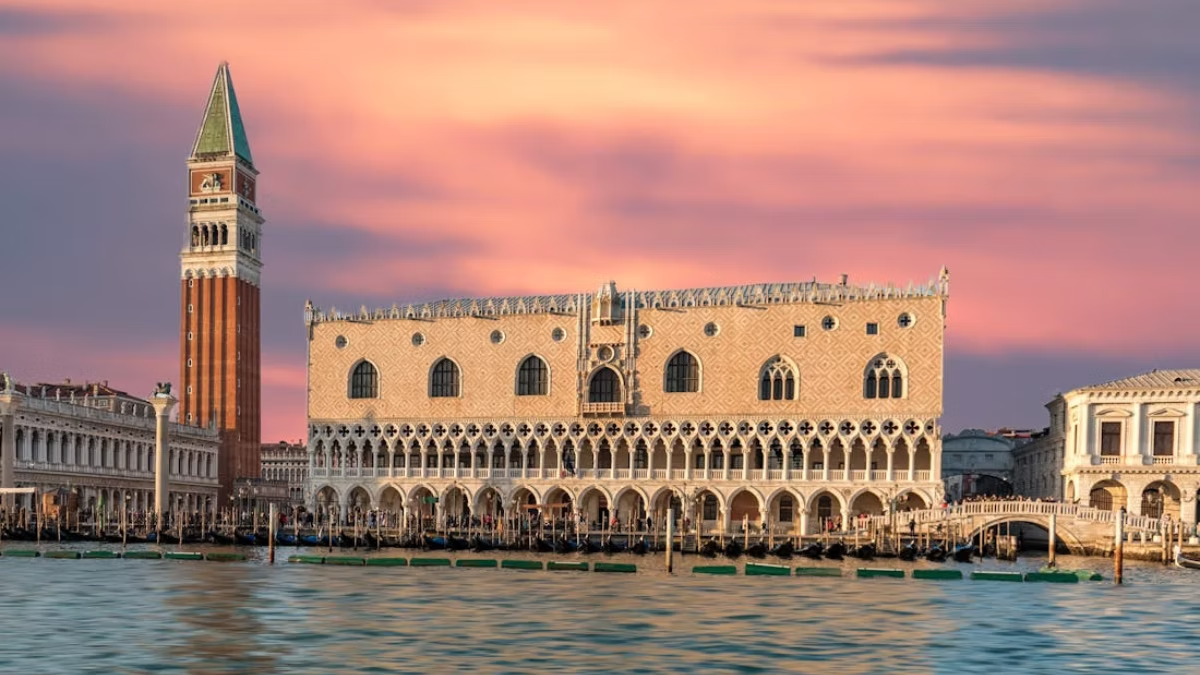
The single best time to visit the Doge’s Palace is early morning (09:00–10:30) in November–February on a weekday, when crowds are at their lowest and interior temperatures are comfortable. The worst time is midday (11:00–15:00) in July–August, when crowds peak, temperatures reach uncomfortable levels, and tour groups fill the largest rooms. For most visitors balancing weather and crowds, mid-April to mid-May or mid-September to late October offer the best compromise — manageable crowds, good weather, and reasonable queue times. Extended Friday/Saturday evening hours (1 May – 26 Sep 2026) offer a quieter alternative for summer visitors.
Knowing when to visit the Doge’s Palace isn’t as simple as “avoid summer.” Different times of year serve different traveller priorities — some visitors prioritize weather, others prioritize crowd avoidance, some want specific seasonal events, others are constrained by when their trip can happen. This article breaks down the trade-offs honestly so you can pick the best window for your specific circumstances, not just the textbook “best time.”
Best Time of Day
Two windows are clearly best: opening (09:00–10:30) and final 2 hours before closing (17:00–19:00 in summer, 16:00–18:00 in winter). The midday window (11:00–15:00) is consistently the worst for crowds, interior temperatures, and the general experience. For summer Fri/Sat visits, the extended evening hours (20:00–22:00) offer the absolute thinnest crowds of the day.
Throughout-the-day crowd pattern (any typical summer day):
| Time Window | Crowd Level | Experience Quality |
|---|---|---|
| 09:00 – 09:30 | Building | Good (opening rush manageable) |
| 09:30 – 10:30 | Moderate | Very good |
| 10:30 – 11:30 | High | Acceptable |
| 11:30 – 14:30 | Peak | Worst window of the day |
| 14:30 – 16:00 | Easing | Improving |
| 16:00 – 17:30 | Moderate | Good (crowds thinning) |
| 17:30 – 18:30 | Low | Excellent (last-hour rush minor) |
| 18:30 – 19:00 | Very low | Excellent but rushed (closing sequence) |
| 19:00 – 22:00 (summer Fri/Sat extended only) | Very low | Exceptional |
Early morning (09:00 – 10:30)
Opening is busy but the first wave clears quickly. By 09:30, most tour groups have dispersed across multiple rooms and individual-traveller crowding eases. This is the best window for self-paced visitors who want to see specific rooms uncrowded.
If you have a semi-private tour with 8:30 AM early entry, you’re inside before 09:00 — even better.
Midday (11:00 – 15:00)
Avoid this window if you have any flexibility. Tour groups of 25+ people fill the Chamber of the Great Council. Interior temperatures in summer exceed 28°C. Bathroom queues grow. Photography in popular rooms becomes nearly impossible due to other visitors in frame.
Late afternoon (15:00 – 17:00 winter / 15:00 – 18:00 summer)
Crowds begin thinning as tour groups head out. This is a quieter, underrated window. By 17:00 in summer the palace is meaningfully less busy than at 13:00.
Closing hour (17:00 – 18:00 winter / 18:00 – 19:00 summer)
Genuinely quiet but feels rushed — staff start closing specific rooms sequentially. Not ideal as a full visit but works if you’ve arrived for a focused 45–60 minute tour of specific rooms.
Extended evening (19:00 – 22:00 Fri/Sat May–Sep 2026)
The quietest window of the day. After 20:00, visitor counts drop dramatically. Summer-specific benefit only — see Doge’s Palace Opening Hours 2026 for the full extended-hours schedule, or Doge’s Palace Evening Guided Tour for guided options in this window.
Best Day of Week
Tuesday, Wednesday, and Thursday are the best days to visit. Monday mornings can be busy as day-trippers arrive in Venice for the week. Weekends (Saturday and Sunday) see heavier crowds, especially in summer when Italians visit Venice from nearby regions. Fridays are moderate — crowded during the day but offering the extended evening hours (May–Sep 2026) as a quiet evening alternative.
Weekly patterns:
- Monday:: Heavier than you’d expect. Many tourists arriving for a week-long Venice trip start sightseeing on Monday morning.
- Tuesday–Thursday: Best days.: Lower crowd density, ideal for self-paced visits.
- Friday:: Moderate daytime, genuinely quiet evening (during extended-hours window, May–Sep).
- Saturday: Busiest day, especially in summer. Italian domestic tourists often visit Venice on weekends.
- Sunday:: Busy, but with a slight afternoon dip as some tour groups return to cruise ships or depart for home.
If your trip flexibility allows, plan your Doge’s Palace visit for a Tuesday, Wednesday, or Thursday morning. If your trip is locked in around a weekend, use the extended Friday evening window (May–Sep) as the quietest alternative.
Best Month: Ranked for Doge’s Palace Specifically
Purely from a Doge’s Palace visitor experience perspective (not general Venice tourism):
| Rank | Month | Why |
|---|---|---|
| 1 | October | Crisp weather, thinner crowds, manageable queues, palace interior comfortable |
| 2 | May | Long daylight, mild weather, extended hours start, crowds manageable |
| 3 | November | Very thin crowds, extremely short queues, atmospheric off-season feel |
| 4 | April | Shoulder-season prices, unpredictable but often good weather |
| 5 | September | Beautiful light, crowds easing from peak, warm but not stifling |
| 6 | March | Low crowds, unpredictable weather, shoulder-season prices |
| 7 | December (excluding 24–26) | Festive atmosphere, low crowds, risk of cold rainy days |
| 8 | June | Getting hot, crowds building, but long daylight |
| 9 | January | Quiet but cold, possible acqua alta, some restaurants closed |
| 10 | February (excluding Carnevale weeks) | Quiet but cold, possible acqua alta |
| 11 | July | High heat, peak crowds, palace interior uncomfortable midday |
| 12 | August | Avoid if possible — maximum heat, maximum crowds, Ferragosto week is especially brutal |
The “best month” consensus for most visitors is October, followed by May. Both offer the combination of manageable crowds, comfortable weather, and full opening hours without the heat/crowd penalties of peak summer.
Best Season: The Honest Calendar
November through February offers the thinnest crowds and lowest prices, but cold weather and possible flooding (acqua alta). April–May and late September–October offer the best balance of manageable crowds and good weather. June–August has the worst crowds and highest temperatures but the longest daylight. March and November are shoulder seasons with unpredictable weather but genuinely quiet palace interiors.
Full seasonal breakdown for Venice in 2026:
| Season | Months | Crowd Level | Weather | Best For |
|---|---|---|---|---|
| Deep winter | Dec–Feb (ex. Carnevale) | Very low | Cold, possibly rainy, risk of acqua alta | Budget, crowd-averse, photographers |
| Carnevale | Feb (variable dates) | Suddenly high | Cold | Carnevale enthusiasts only |
| Early spring | March–mid April | Low–moderate | Unpredictable, often rainy | Shoulder-season flexibility |
| Late spring | Mid April–May | Moderate | Mild, generally pleasant | Best overall for most visitors |
| Early summer | June | High | Warm | Visitors who want long daylight |
| Peak summer | July–August | Highest | Hot, humid, stifling interiors | Schedule-constrained visitors only |
| Late summer | September | High | Warm, often beautiful | Most comfortable summer window |
| Early autumn | October | Moderate | Crisp, variable | Second-best overall window |
| Late autumn | November | Low | Cold, possibly rainy, some acqua alta | Crowd-averse visitors |
| Holiday window | Mid-Dec to early Jan (ex. closures 25 Dec + 1 Jan) | Moderate | Cold, festive atmosphere | Holiday-season atmosphere seekers |
Winter (November – February)
The case for: Venice is at its quietest between late November and early February (excluding Carnevale weeks in mid-February). Palace queues genuinely shrink. Hotel prices drop 30–50% from peak season. The interior is comfortable — no summer sweltering. Photography conditions indoors are often better with softer winter daylight through the palace’s high windows.
The case against: Venice in December–February can be cold (daily highs 6–10°C), rainy, and foggy. Acqua alta (high-water flooding) can affect ground-level access around the palace, though the palace itself is largely flood-resistant. Short daylight hours mean sunset around 17:00 limits outdoor sightseeing. Some restaurants and smaller sights close for seasonal breaks.
Best for: Budget travellers, repeat Venice visitors, serious photographers, visitors who specifically want the uncrowded experience.
Spring (March – May)
Early spring (March – mid April): Shoulder season. Crowds are low, prices moderate, weather genuinely unpredictable — you might get warm sunny days or cold rainy ones in consecutive weeks. This is a calculated bet.
Peak spring (mid April – May): Arguably the best time to visit Venice overall. Moderate crowds, generally mild weather, long daylight, Italian spring flowers blooming. Most restaurants are open. Summer extended evening hours begin on 1 May 2026.
Best for: First-time visitors who want a balanced experience, couples on romantic trips, most general visitors.
Summer (June – August)
Early summer (June): Getting busy but manageable. Temperatures climb into the high 20s–low 30s°C. Still bearable inside the palace, which doesn’t have air conditioning in most rooms.
Peak summer (July–August): The hardest time to visit. Crowds hit maximum density, palace interior temperatures exceed 28°C midday, every major attraction has extended queues, and prices hit peak levels. Italian tourists join international ones for the Ferragosto (15 August) holiday week — arguably the single most crowded week of the year.
Late summer (September): Genuinely beautiful. Crowds start thinning after Labour Day equivalent, weather remains warm but less intense, and the light is often spectacular. Many travellers consider September the sweet spot of summer.
Best for summer visits: Only if your schedule requires it, or if you specifically want the Friday/Saturday extended evening hours (1 May – 26 Sep 2026) to avoid the worst midday crush.
Autumn (October – November)
October: Nearly as good as late May. Crowds ease meaningfully, weather is often crisp and sunny, and prices drop from peak. The Venice Biennale is typically winding down.
November: Transitional. Crowds drop sharply after the first week, weather becomes unpredictable, acqua alta season begins. Italian and Catholic holidays (All Saints’ Day on 1 November) can create brief crowd bursts.
Best for: Visitors who want a quieter experience without committing to full winter.
Special Considerations
Visiting during Carnevale (February)
Venice’s famous Carnival runs roughly 10–14 days in mid-February. During Carnevale:
- Crowds in central Venice spike dramatically
- The palace remains open with standard winter hours
- Masked participants and costumed visitors in St. Mark’s Square create memorable photography but also major navigation challenges
- Hotel prices can triple from normal winter rates
If Carnevale itself is your draw, accept the crowds. If you’re just visiting Venice in February, book dates avoiding the Carnevale window for the quieter experience.
Visiting during Venice Biennale (variable)
The Biennale is Venice’s major international art exhibition, running from roughly late April to late November in even-numbered years (including 2026). It’s centered at the Arsenale and Giardini, not at the Doge’s Palace, but it draws serious art visitors to Venice for extended stays.
Practical impact on palace visits: moderate increase in general Venice crowds, minimal direct impact on palace queues, more cultural context available across the city.
Visiting during Festa del Redentore (mid-July)
Venice’s biggest summer festival, featuring a spectacular fireworks display over St. Mark’s Basin. The palace remains open normally, but:
- Central Venice becomes very crowded on the Saturday night of the festival
- Vaporetto routes reroute for safety
- Hotel prices spike for that specific week
- The week following is unusually quiet as local tourists depart
Visiting during Regata Storica (September)
Venice’s most historic regatta, held on the first Sunday of September. Involves costumed rowers in period boats along the Grand Canal. The palace remains open with normal hours; central Venice becomes busy but navigable.
Visiting in acqua alta (high-water flooding, Oct–Mar)
Acqua alta affects Venice intermittently from October to March, peaking in November–December. During severe events (over 100cm tide level), raised walkways appear across St. Mark’s Square and some sections. The palace itself is largely flood-resistant, but navigating to the palace entrance can become genuinely difficult during peak flooding events.
Check the tide forecast (previsione maree) at the official Venice municipality site before winter visits. Most acqua alta events are mild and don’t significantly disrupt sightseeing.
The Best Time Depends on Your Priorities
Pick by priority. If crowds are your top concern → visit in November–February on a weekday morning. If weather is top concern → visit in late April–May or September–October. If price is top concern → January–March (excluding Carnevale) or November. If you want the evening atmosphere → visit during extended Fri/Sat hours in May–September. If you want the experience with minimal compromise → aim for October.
Specific recommendations by traveller profile:
First-time visitors with no constraints:
Book for mid-May or early October. Best overall balance.
Photographers focused on interior shots:
Book for November–February weekday mornings. Minimal crowds for clean shots. Early-access tours amplify this advantage. See Semi-Private Doge’s Palace Tour with Early Entry.
Families with young children:
Book for May or September. Mild weather reduces the “overheated kids” problem, and slightly thinner crowds help with stroller navigation. See Visiting Doge’s Palace with Kids.
Budget travellers:
Book for January–early February or November. Lowest prices across flights, hotels, and tours.
Visitors with a specific festival interest:
Book for that festival’s window and accept the crowd/price premium.
Cruise passengers with a fixed port date:
You can’t pick your date, but you can pick your time slot within your day — aim for arriving at the palace as early as possible after docking.
Repeat Venice visitors:
Book for the off-season windows you haven’t tried — often November or February offer a fundamentally different Venice experience than peak season. Consider the Secret Itineraries Tour for fresh content.
Frequently Asked Questions
Is the Doge’s Palace open year-round?
Yes. Only 25 December and 1 January are full closures. Every other day of the year, the palace is open. See Doge’s Palace Opening Hours 2026.
What’s the absolute worst time to visit?
The week of Ferragosto (15 August) combined with peak midday hours. Maximum heat, maximum crowds, uncomfortable interior temperatures.
Is the summer extended-hours window (Fri/Sat May–Sep 2026) really quieter?
Yes, meaningfully. Visitor counts after 20:00 drop 70–80% compared to midday peak. Confirmed across reviewer reports for 2025 season.
Should I avoid Venice during Carnevale?
Depends on your priorities. Carnevale is a genuinely special experience, but it brings major crowd and price premiums. If Carnevale itself interests you, go during Carnevale. If not, avoid the mid-February Carnevale weeks.
Does winter acqua alta flooding affect Doge’s Palace access?
Rarely enough to fully prevent access. Most acqua alta events are mild (under 110cm). Severe events (over 140cm) can make the walk to the palace challenging but the palace itself is accessible via raised interior walkways.
Are there quieter days within a peak-crowd week?
Tuesday, Wednesday, and Thursday within any given week. Monday morning can be unexpectedly busy due to week-starter arrivals.
What’s the best time for photography at the palace?
Morning opening or extended evening hours. Both offer dramatically reduced crowd density, and morning light through the palace’s high windows creates distinctive illumination in the Chamber of the Great Council specifically.
Can I time my visit to coincide with a specific event inside the palace?
The palace doesn’t run public events within its opening hours that require pre-timing beyond the Secret Itineraries tour schedule. See Secret Itineraries Tour: Complete Guide.
How far in advance should I book?
For peak season (May–September): 3–4 weeks ahead minimum, longer for weekend or evening tour slots. For shoulder season (March–April, October–November): 1–2 weeks ahead. For winter off-season (December–February excluding Carnevale): day-of or next-day booking usually works.
What if the weather changes during my visit?
Indoor sights like the Doge’s Palace are weather-proof. The palace is a great rainy-day activity in Venice — you can easily spend 3+ hours inside avoiding weather.
For more planning questions: Doge’s Palace FAQs.
