

Where to Eat Near Doge’s Palace 2026: Honest Food Guide for the Area
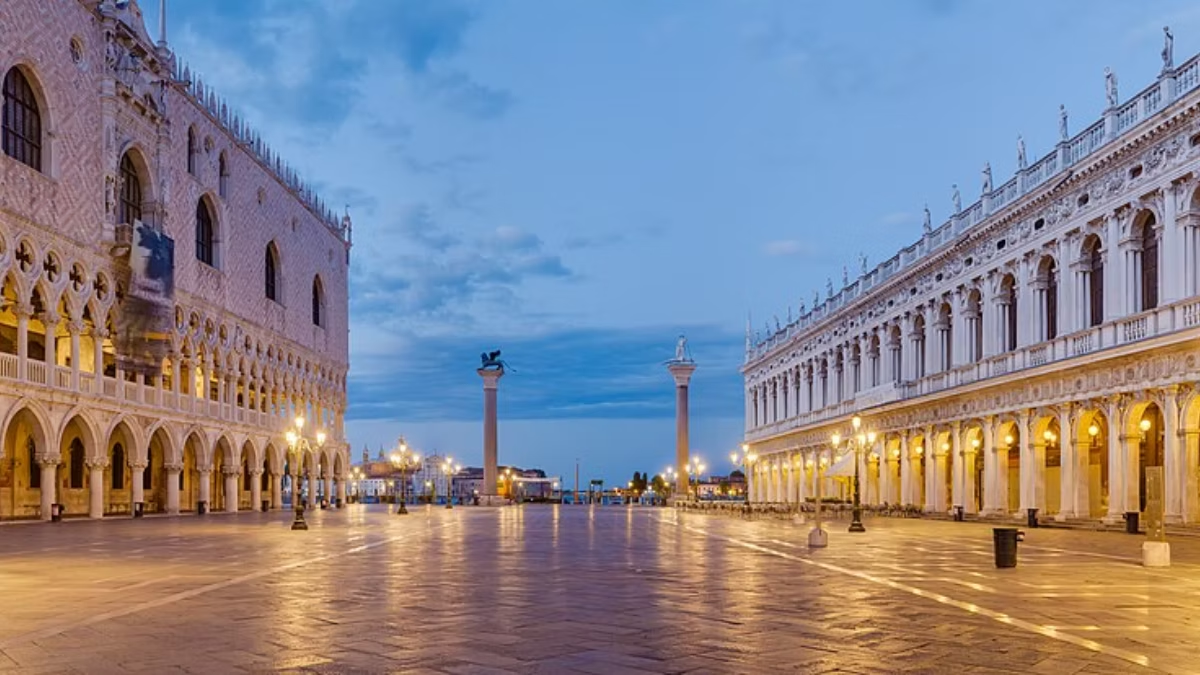
The single most important rule is to walk at least 3–5 minutes away from St. Mark’s Square before eating. Restaurants directly on the Piazza San Marco and the immediate Piazzetta charge tourist-trap prices (€8–12 for espresso, €25–40 for a basic pasta) with often-mediocre food. Within 5–10 minutes’ walk, in the Castello district (east of the palace) or San Zulian (just north), authentic trattorias serve proper Venetian cicchetti (small plates), seafood pasta, and wine at normal Venice prices (€4–6 espresso, €12–18 pasta, €15–25 main courses). This guide covers specific areas, types of places, and what to look for.
Eating well near the Doge’s Palace is genuinely harder than it should be — the density of underwhelming tourist restaurants in the immediate St. Mark’s Square area is considerable, and many visitors default to whichever place has a convenient terrace. A little walking transforms your options. This article covers the practical rules, the specific neighborhoods worth walking to, and the types of Venetian food experiences worth seeking out after (or before) your palace visit.
The Tourist Trap Zone to Avoid
Restaurants directly on Piazza San Marco, on the Piazzetta, and on the first 50 meters of Riva degli Schiavoni charge roughly double the prices you’d pay two minutes further from the square, and the food is rarely better — often worse. The historic cafés on the square itself (Florian, Quadri, Lavena) are culturally significant but priced for their location, not their coffee. If you want an authentic Venetian meal rather than a view-tax sit-down, walk 3–5 minutes in any direction from the palace.
Specific patterns that signal a tourist-trap restaurant:
- Multilingual menus (English, German, Japanese, Chinese) displayed prominently outside
- Photos of the food on the menu
- Hosts actively soliciting passing tourists
- “Tourist menu” at a fixed price (usually €20–30 for underwhelming food)
- Located on a canal-view terrace with obvious sightlines to major landmarks
- Italian waiters speaking primarily in English even to Italian customers
These places aren’t all terrible, but at €25 pasta and €12 espresso, the value proposition is poor. The historic Piazza San Marco cafés (Florian, Quadri, Lavena) are a different category — cultural institutions where you’re explicitly paying for the setting, not the food.
The Better Neighborhoods Within 10 Minutes
Three directions offer meaningful improvements. East into Castello (toward Arsenale) — authentic trattorias and cicchetti bars frequented by locals, 5–10 minutes’ walk. North into San Zulian — mix of tourists and locals, 3–5 minutes. West across the Rialto — another district entirely, 12–15 minutes but a proper food area with the Rialto Market nearby. Walking instead of riding saves you nothing on the vaporetto but shows you the Venice tourists miss.
Castello (east of the palace)
- Direction:: Walk east along Riva degli Schiavoni, then turn inland after 200–300 meters
- Distance: 5–10 minutes’ walk from the palace entrance
- Atmosphere:: Progressively more residential as you walk east. Laundry hanging across alleys, local kids playing, real neighborhoods.
- Food style:: Traditional Venetian trattorias, a few cicchetti bars (bacari), modest prices
- Best for:: Sit-down lunch or dinner after the palace
San Zulian (north of the palace)
- Direction:: Walk north from St. Mark’s Square via Merceria San Zulian (the shopping street)
- Distance: 3–5 minutes’ walk
- Atmosphere:: Mixed tourist and local, slightly more commercial
- Food style:: Cicchetti bars, a few sit-down trattorias, plenty of gelato
- Best for:: Quick bite, drinks, lunch on the go
Across the Rialto
- Direction:: Walk north then west toward the Rialto Bridge area
- Distance: 12–15 minutes’ walk
- Atmosphere:: Another proper food district, especially near the Rialto Market
- Food style:: Deep Venetian food culture: fresh market seafood, classic cicchetti bars
- Best for:: Dedicated food day, not a quick stop after the palace
Venetian Food Types Worth Seeking Out
Order Venetian specialties rather than generic Italian dishes. Cicchetti are small plates (like Venetian tapas) served in bacari — order 4–6 with a glass of wine for an informal meal at €15–25 total. Sarde in saor (sweet-sour marinated sardines) and baccalà mantecato (whipped cod) are two classic cicchetti. For pasta, try bigoli in salsa (thick spaghetti with anchovy sauce). For mains, fegato alla veneziana (Venetian-style liver) or any seafood risotto. For seafood, moeche (soft-shell crabs) in spring/autumn only. Avoid spaghetti carbonara and generic Italian dishes — Venice has its own cuisine worth discovering.
Cicchetti (small plates)
The most distinctive Venetian eating experience. Small plates of seafood, cured meats, and vegetables served at bacari (stand-up bars). Typical order: 4–6 cicchetti with a glass of wine or ombra (small local wine pour). Total cost €15–25 per person for a substantial informal meal.
Common cicchetti:
- Sarde in saor: sardines marinated in sweet-sour onion sauce with raisins and pine nuts
- Baccalà mantecato: whipped salt cod, served on bread
- Polpette: meatballs, often tuna-based
- Folpi: small octopus
- Mozzarella in carrozza: fried mozzarella sandwiches
Classic sit-down dishes
- Risotto al nero di seppia: squid ink risotto (black)
- Bigoli in salsa: thick whole-wheat spaghetti in anchovy-onion sauce
- Fegato alla veneziana: calf’s liver with caramelized onions
- Risi e bisi: rice and peas, spring specialty
- Moeche fritte: fried soft-shell crabs (April–May and September–November only)
- Fritto misto: mixed fried seafood
- Sardina fritta: fried fresh sardines
Gelato
Venice has excellent gelato if you pick the right places:
- Look for gelato that’s clearly stored in covered tubs (freshly made), not piled high in artificial colorful mounds
- Pistachio should be brown-green, not bright fluorescent green
- Typical cost: €2–4 for a small cone, €3–5 for medium
Coffee and Café Culture
Italian coffee is cheap and fast — an espresso at the bar should cost €1.20–1.50, a cappuccino €1.50–2.50. These are standing-at-the-bar prices. Sitting at a table increases the cost by 2–4x. Paying €8–12 for coffee means you’re at a tourist-premium location. Walk 2–3 minutes away from St. Mark’s Square for normal café prices. Italians drink cappuccino only before 11 AM — ordering one after lunch marks you as a tourist but no one will refuse to make it.
Café etiquette:
- Order at the bar: cheapest, fastest. Say “un caffè” for an espresso, “un cappuccino” for cappuccino
- Sit at a table: only if you’re pausing at length: service charge of 2–4x applies
- Pay first, then order: at some places: watch locals to confirm which system applies
- Morning only for cappuccino: locals don’t order them after 11 AM, but tourists can without issue
- After lunch: espresso is the standard. Cappuccino-after-lunch is considered strange but not taboo
The historic Piazza San Marco cafés
Florian (open since 1720), Quadri (since 1638), and Lavena (since 1750) are historic cafés on the square itself. Pricing:
- Espresso at the bar: €8–12 (vs €1.20–1.50 at a normal bar)
- Coffee at a terrace table: €12–20
- When the orchestra is playing: additional €6–8 music surcharge
- Aperitivo drinks: €15–25 each
These places are genuine cultural institutions — famous visitors from Byron to Hemingway drank at Florian’s. Whether the experience justifies the price is personal. For a once-per-trip cultural moment: possibly yes. For a normal morning coffee: definitely not.
Practical Meal Planning Around Your Palace Visit
Morning visit (09:00 slot):
- Breakfast: quick café + pastry at a local bar 3–4 minutes from the palace, €3–5
- Post-visit lunch: walk 5–10 minutes east into Castello, sit-down trattoria €20–30 per person
- Gelato stop: on the walk back
Afternoon visit (14:00 slot):
- Lunch before: full sit-down meal 11:30–13:00 in Castello or San Zulian, €20–30
- After-visit aperitivo: cicchetti + wine at a bacaro, 17:00–18:30, €15–25
Full day with basilica combo:
- Light breakfast before 09:00 start
- Quick pastry mid-morning during break between palace and basilica
- Late lunch 14:00–15:30 in Castello, €25–35
- Aperitivo 18:00–19:00
Evening visit (extended Fri/Sat hours in summer):
- Early dinner 18:30–19:30 before 20:00–21:00 palace slot
- Post-visit drinks: plenty of bars open until midnight in Venice
What to Look For in a Venetian Restaurant
Good signs: Italian-only or Italian-prominent menu, fewer English-speaking staff, local customers visible inside (not just tourists), small menu (5–8 pasta options rather than 30), no photos of food, prices that feel normal rather than tourist-inflated. Bad signs: staff soliciting passing tourists, oversized menu with every cuisine, “tourist menu” at a set price, laminated menus, photos of every dish. Reviews on Google Maps and Tripadvisor are useful but tourists review differently than locals.
Specific quality signals:
- Handwritten or short typed menu: suggests limited choices and freshly-sourced ingredients
- Seasonal items: on the menu (moeche in spring/autumn, sarde in summer)
- Fish displayed on ice: visible from the door (for seafood places)
- Wine list leaning toward Veneto wines: (Prosecco, Valpolicella, Soave, Amarone)
- Local customers: in the mix of diners
- Reservation possibly needed: for dinner, even on weekdays: a good sign
Budget Ranges
Realistic 2026 prices for a proper sit-down lunch or dinner in Venice (not tourist-trap pricing):
| Meal Type | Budget Range | Mid-Range | Premium |
|---|---|---|---|
| Espresso at the bar | €1.20–1.50 | €2–3 | €8–12 (Piazza San Marco) |
| Cappuccino at the bar | €1.50–2.50 | €3–4 | €10–15 |
| Cicchetti + glass of wine | €5–10 | €12–18 | €25+ |
| Light lunch (pasta + water) | €15–20 | €22–30 | €35–50 |
| Full dinner (2 courses + wine) | €35–45 | €50–70 | €80–150 |
| Seafood feast | €50+ | €70–100 | €120+ |
Tipping: service is typically included. Rounding up or leaving small change (€1–3) is common but not obligatory.
Payment and Practical Tips
- Most restaurants accept credit cards; smaller bars and some cicchetti places are cash-only
- ATMs (bancomat) are common in San Marco and Castello
- Coperto: (cover charge, usually €2–5 per person) is standard at sit-down restaurants
- Acqua frizzante: (sparkling water) and acqua naturale (still water) are bottled and charged
- Free tap water is often requested but not always offered: ask specifically for “acqua del rubinetto”
Dietary Considerations
Venetian cuisine can accommodate most dietary needs:
- Vegetarian: risottos (plenty of non-meat options), pasta with vegetable or butter-cheese sauces, caprese salads. Ask for “piatti vegetariani”
- Vegan: harder in traditional trattorias; better in Cannaregio and some Castello spots. Ask for “senza latticini e carne” (without dairy and meat)
- Gluten-free: increasingly common. “Senza glutine” signage appears on some menus
- Seafood allergies: Venetian cuisine is heavily seafood-based; state allergy clearly
- Kosher: limited options; the historic Ghetto (Cannaregio) has some kosher restaurants
For Families with Kids
Families with kids will find:
- Pizza: widely available even in non-tourist restaurants
- Simple pasta: (butter, cheese, plain tomato sauce) easy to order
- High chairs: at larger sit-down places but not small bacari
- Gelato: everywhere, universal kid-pleaser
- Early dinner hours: (18:30–19:30) easier for kids than late Italian schedule (20:30+)
See Visiting Doge’s Palace with Kids for full family guidance.
Frequently Asked Questions
Why are restaurants on St. Mark’s Square so expensive?
The location premium is real — prime real estate in one of the world’s most famous squares commands rent that must be recouped through pricing. Historic cafés (Florian, Quadri) are priced for cultural significance, not food quality.
How much for a proper lunch in Venice?
€20–30 per person for a proper sit-down lunch with pasta and water. €35–50 for a more substantial meal with wine.
Are cicchetti a full meal?
Can be — 4–6 cicchetti with wine (roughly €15–25 total) constitutes an informal lunch. For a more substantial meal, combine with a pasta course.
When do restaurants serve lunch and dinner?
Lunch: roughly 12:00–14:30. Dinner: 19:00–22:30, with Italians tending to eat later (20:30–21:30 arrival is common). Restaurants generally close between lunch and dinner service.
Is tipping expected?
Service is typically included. Rounding up or leaving small change is common but not obligatory. Americans sometimes over-tip; Italian staff appreciate but don’t expect 15–20% tips.
Can I eat inside the Doge’s Palace?
Not in visitor rooms, but the ground-floor café serves coffee and light food. For proper meals, exit the palace and return with your valid ticket.
What time should I eat before a 14:00 palace visit?
Arrive for lunch by 12:00–12:30 to finish comfortably by 13:30, giving you 15–20 minutes to walk to the palace for a 14:00 slot.
Are reservations needed?
For dinner at quality sit-down restaurants: yes, especially weekends. For lunch: usually walk-in works. For cicchetti bars: never needed.
Is Venice food expensive?
Compared to most of Italy, yes. Venice has higher base costs due to logistics. But 10–20% cheaper than tourist-trap pricing if you walk a few minutes away from landmarks.
Where do local Venetians eat?
Most live outside the historic center now (in Mestre or the lagoon islands). Those who remain eat in smaller trattorias in Castello, Cannaregio, and Dorsoduro — rarely on Piazza San Marco.
Can I bring food from a takeaway place?
Takeaway is fine for walking around. Don’t eat on the steps of St. Mark’s Basilica or Piazza San Marco itself — signs forbid it and fines are enforced.
