

Secret Itineraries Tour: Complete Guide
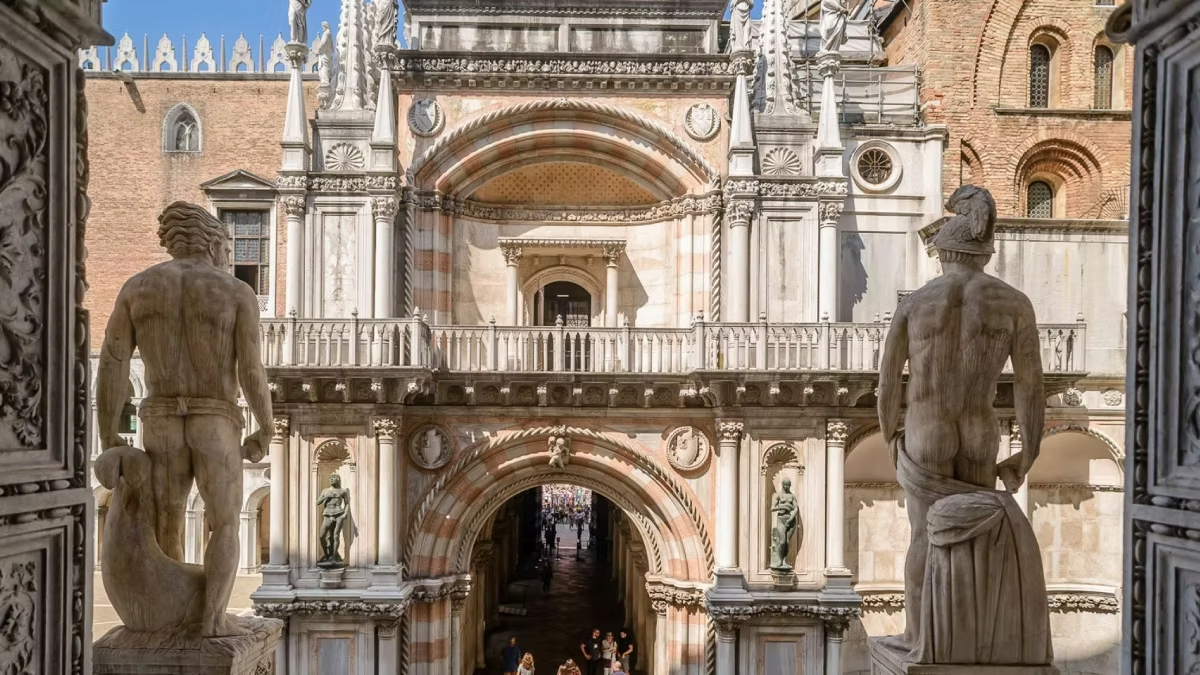
The Secret Itineraries Tour (Itinerari Segreti) is a 75-minute guided tour through rooms of the Doge’s Palace that standard ticket holders never see — the Chancellery, the torture chamber (Sala della Tortura), the Piombi prison cells where Casanova was famously held, and the palace’s hidden wooden attic. It costs €40 (€20 reduced) direct from the museum, runs daily in English, Italian, and French, and almost always sells out 2–3 months in advance during peak season. It’s widely considered the single best ticket at the Doge’s Palace for repeat visitors and history enthusiasts.
Most people who visit the Doge’s Palace never see the rooms where the Venetian Republic’s real business happened. The grand ceremonial halls are spectacular, but the actual government — the interrogations, the political imprisonments, the espionage, the bureaucratic machinery that kept a thousand-year republic running — operated in cramped offices, concealed corridors, and timber-framed attic cells tucked above the gilded ceilings. The Secret Itineraries Tour is the only way to access any of it. This guide covers exactly what the tour includes, how to book it, the trade-offs of different time slots, and why it’s worth planning around.
What the Secret Itineraries Tour Includes
The tour covers four categories of normally-closed spaces: the working rooms of the Venetian state (Chancellery, Secret Chancellery, Inquisitors’ Rooms), the interrogation and torture chamber (Sala della Tortura), the Piombi prison cells in the lead-roofed attic including Casanova’s cell, and the palace’s wooden roof structure — a cathedral of 15th-century timber that sits above the painted ceilings of the Great Council Chamber. A standard palace ticket doesn’t include any of these.
Here’s what you actually walk through on the tour, in roughly the order it’s presented:
1. The Chancellery (Cancelleria)
The room where the Republic’s diplomatic correspondence was copied, archived, and encrypted. The walls are lined with labelled cupboards containing what was once the Republic’s active diplomatic memory — thousands of treaties, letters, and intelligence reports. Tour groups are shown the original cupboards, many still bearing their 16th-century labels.
2. The Secret Chancellery (Cancelleria Segreta)
A smaller, more restricted space used for the Republic’s most sensitive documents — encrypted dispatches, spy reports, and the state’s dealings with its own citizens. This is where the Council of Ten’s most confidential work was filed.
3. The Inquisitors’ Rooms
The working offices of the three Inquisitors of State (Inquisitori di Stato), who investigated matters of state security — espionage, political crime, and threats to the Republic. The space is strikingly small and domestic, which is part of its unsettling effect: the most consequential decisions in Venetian politics were made in rooms barely bigger than a large study.
4. The Torture Chamber (Sala della Tortura)
A small stone-walled room where the Inquisitors extracted confessions, most commonly via the corda — a rope-and-pulley system that dislocated the shoulders of the accused. The room includes the original iron hook from which suspects were suspended. Your guide will explain the legal procedure, which prescribed a specific duration for the corda depending on the severity of the suspected offence.
5. The Piombi Prisons
The infamous lead-roofed attic prisons — named Piombi because of the lead plates covering the roof, which made the cells stiflingly hot in summer and brutally cold in winter. Reserved for prisoners of higher social standing. The tour includes Casanova’s cell, from which he made his 1756 escape — famously documented in his memoirs — making it the only prison cell in the world marketed partly on the strength of a guest’s exit.
6. The Wooden Attic (Sottotetti)
The tour climbs above the Great Council Chamber to see the structural woodwork that supports the painted ceiling below. A vast 15th-century timber frame, visible in raw form, suggesting how the palace was actually built and maintained. This is easily the most unexpected room on the tour — most visitors don’t realise there’s an attic above the palace’s ceremonial halls.
7. Return to the Standard Palace Route
After the Secret Itineraries section, your ticket includes self-guided access to the standard Doge’s Palace rooms (Chamber of the Great Council, Senate, Apartments, Bridge of Sighs, armoury). Most visitors do this portion in 90–120 minutes after the tour ends.
Tour Times, Languages, and Practical Details
The museum runs the Secret Itineraries Tour daily in three languages, with multiple slots per day.
| Language | Typical Times (may vary) |
|---|---|
| Italian | 09:55, 10:45, 11:35 |
| English | 09:55, 10:45, 11:35 |
| French | 09:55, 10:45, 11:35 |
Specific times are confirmed at booking and can shift by 5–15 minutes seasonally. Each language usually gets one slot in each of the three windows.
Tour length: 75 minutes for the Secret Itineraries portion.
Total time in palace: Allow 3 hours total (tour + standard palace rooms afterwards).
Group size: Maximum 25 people per language per slot.
Meeting point: The Doge’s Palace ticket desk, inside the courtyard. Arrive 15 minutes before your slot.
Secret Itineraries Tour Price (2026)
| Category | Price |
|---|---|
| Adult | €40.00 |
| Reduced (6–14, 15–25, 65+) | €20.00 |
| Child under 6 | Not permitted |
Note on age restriction: Children under 6 are not admitted on the Secret Itineraries Tour. This is a firm rule — it’s not suitable for young children because of the narrow passages, low ceilings, and the content of the torture chamber. Children aged 6–10 are technically permitted but most guides discourage it.
The €40 price is fixed — there is no online early-booking discount. Access to the rest of the palace and the other St. Mark’s Square museums is included in the ticket. For the full pricing breakdown of all Doge’s Palace tickets, see Doge’s Palace Ticket Prices 2026.
How to Book the Secret Itineraries Tour
Book direct from the official museum site (vivaticket.it) as soon as you confirm your Venice dates. In peak season (April–October), English-language slots sell out 60–90 days ahead, and the Italian-language slots follow 2–4 weeks later. The official site is the cheapest option and has the earliest inventory release.
Book This TourThe practical booking steps:
- Go to vivaticket.it: (the official Fondazione Musei Civici ticket portal) and search “Itinerari Segreti.”
- Select your date.: Inventory is released roughly 6 months ahead. Slots 3–6 months out usually have the best availability.
- Choose language and time.: English slots go first. If your date shows “sold out” in English, check Italian: you won’t understand the guide, but the rooms are the experience.
- Pay and receive digital voucher.: The vivaticket site is in multiple languages but occasionally defaults to Italian; use a browser with translation enabled if this happens.
- Arrive 15 minutes before your slot.: Meet at the main Doge’s Palace ticket desk, show your voucher, and your guide will collect you there.
Cancellation: Tickets bought direct from the museum are generally non-refundable. If you’re unsure about your dates, booking via a reseller with free cancellation (usually up to 24 hours before) adds flexibility at the cost of a modest markup.
For the broader “where to buy” discussion: Doge’s Palace Official Website: Booking Guide & Honest Review.
When Does the Secret Itineraries Tour Sell Out?
The Secret Itineraries Tour sells out faster than any other Doge’s Palace ticket. In peak summer, English slots are fully booked 60–90 days ahead. For Carnival (February), plan on 90–120 days ahead. For shoulder season (March, April, October, November), 2–6 weeks is usually enough. Winter off-peak (mid-November through January, excluding Christmas week), slots are often available within the week.
Rough month-by-month guidance for booking the English-language tour:
| Month | Recommended Booking Lead Time (English slots) |
|---|---|
| January (post-Epiphany) | 1 week |
| February (non-Carnival) | 2–3 weeks |
| February (Carnival weeks) | 90–120 days |
| March | 4–6 weeks |
| April–May | 6–10 weeks |
| June–August | 10–14 weeks |
| September | 8–12 weeks |
| October | 4–8 weeks |
| November (first half) | 2–4 weeks |
| November–December (off-peak) | 1–2 weeks |
| Christmas / New Year’s week | 4–6 weeks |
If you’re reading this and your dates are closer than the recommended window, check availability immediately — and keep checking, because cancellations open up inventory periodically.
What Happens If It’s Sold Out?
You have three realistic options:
- Check an alternative language.: The Italian and French slots often remain available after English sells out. The rooms are the draw; a guide speaking Italian is not a dealbreaker if you’ve read about the tour in advance.
- Try other dates in your trip.: The tour has multiple slots daily, so flexibility by even one or two days often helps.
- Consider The Doge’s Hidden Treasures Tour (€40): instead. It’s the other specialty tour at the palace, covering the restored Chiesetta and Antichiesetta del Doge. Less famous, but meaningfully easier to book.
For further alternatives: What to Do If Doge’s Palace Tickets Are Sold Out.
Who Is the Secret Itineraries Tour Best For?
The tour is ideal for repeat Venice visitors, first-time visitors with a strong interest in political or legal history, and anyone who’s read about Casanova, the Council of Ten, or the Venetian Inquisition. It’s not well-suited for first-time visitors on tight schedules who haven’t yet seen the standard palace rooms, for very young children, or for travellers who find confined spaces or descriptions of historical torture distressing.
Honest guidance on fit:
- Good fit:: Repeat visitors, history enthusiasts, literature fans (Casanova’s memoirs), law or political-history backgrounds, travellers with 4+ hours to spend at the palace complex.
- Mixed fit:: First-time Venice visitors: you may prefer seeing the standard rooms first and returning another trip for Secret Itineraries. It’s a tour that’s dramatically richer when you already know the palace.
- Poor fit:: Families with children under 10, travellers with claustrophobia (the wooden attic and some prison corridors are cramped), visitors who already find the palace’s standard rooms overwhelming, and anyone who finds the torture chamber element off-putting.
For broader “is it worth it” questions: Are Doge’s Palace Tickets Worth It?
Frequently Asked Questions
Is the Secret Itineraries Tour the same as The Doge’s Hidden Treasures Tour?
No — they’re separate products, both €40, both 75-minute guided tours, but they cover different spaces. Secret Itineraries covers the working rooms, prisons, and attic. Hidden Treasures covers the doge’s private chapel spaces.
Does the Secret Itineraries ticket include the rest of the Doge’s Palace?
Yes. Your €40 ticket includes the full standard palace route after the tour ends, plus entry to Museo Correr, the Archaeological Museum, and the Marciana Library.
Can I take photos on the Secret Itineraries Tour?
Photography is permitted in most rooms, with no flash. Some sections (particularly in the Chancellery and the archive-adjacent rooms) are off-limits for photography due to conservation concerns. Your guide will indicate where.
Is the tour available in audio-guide form instead of a live guide?
No. The Secret Itineraries is exclusively a live-guided tour. The normally-closed rooms cannot be entered without a guide.
How physically demanding is the Secret Itineraries Tour?
Moderate. There are narrow staircases, low doorways (duck in the attic), and some uneven stone floors. If stairs are a significant problem, the tour isn’t fully accessible. The palace itself has step-free routes, but the Secret Itineraries sections do not.
What’s the absolute minimum notice for booking?
In the off-peak quiet weeks of November–January, same-week booking is often possible. In peak season, last-minute availability is extremely rare and usually limited to Italian-language slots.
For more visit-specific questions: Doge’s Palace FAQs.
